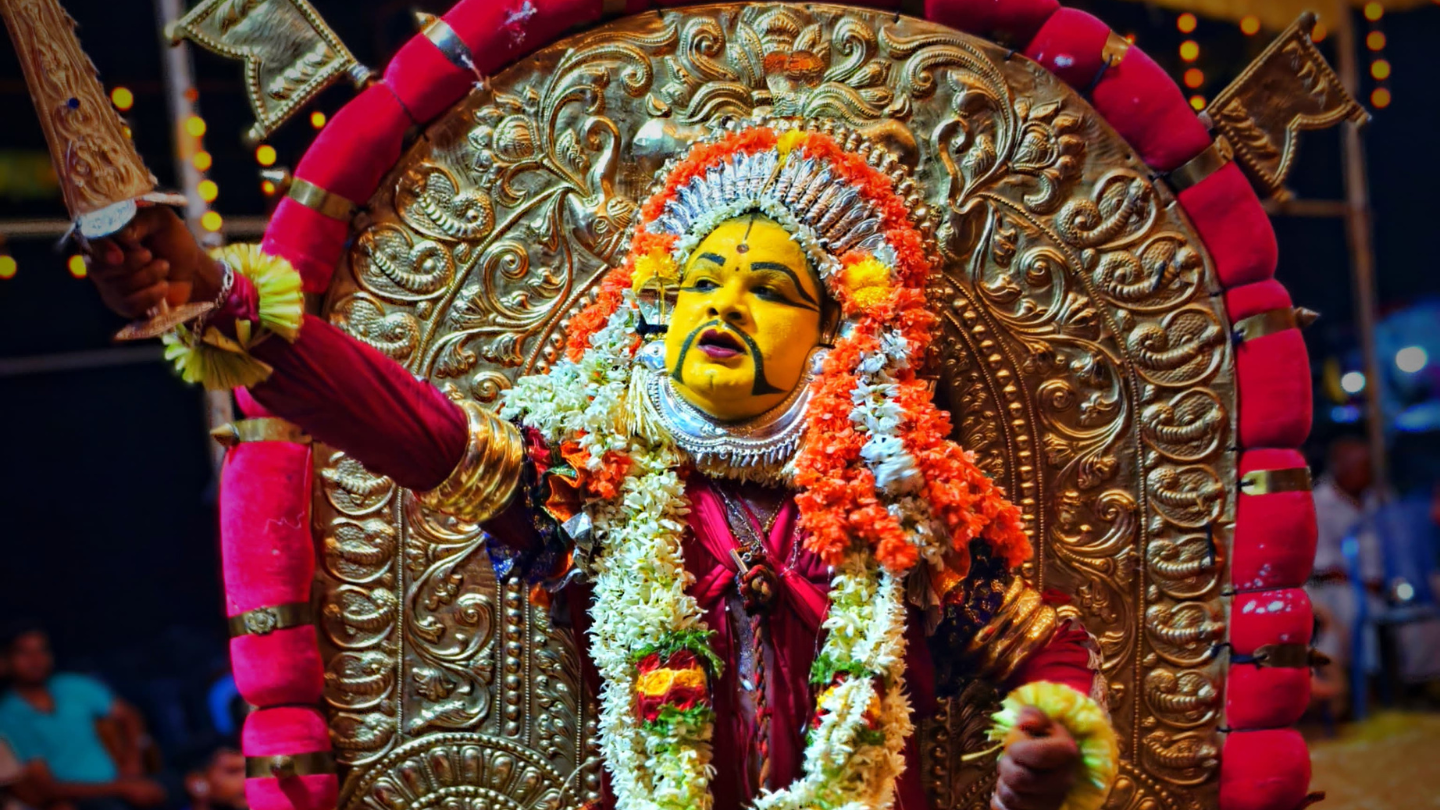
Bhoota Kola
The living spirit tradition of Kundapura, Daiva Kola, Daiva Nema.
Among the most distinctive and spiritually significant traditions of Kundapura is Bhoota Kola, also known as Daiva Kola or Daiva Nema. For centuries this sacred ritual has been integral to the social, cultural and religious life of the region. While temples hold an important place in the spiritual landscape, Bhoota Kola represents a parallel and equally respected tradition, rooted in the worship of Daivas, the guardian spirits believed to protect families, villages, farmlands, forests and communities.
For the people of Kundapura, Bhoota Kola is not entertainment. It is a sacred event where the divine is believed to manifest among the people, combining devotion, oral history, music, dance, ancestral memory, justice and community participation into a single cultural institution that has survived for generations.
The concept of Daivas
The foundation of Bhoota Kola lies in the belief that certain divine beings or guardian spirits watch over society. These Daivas are regarded as protectors who safeguard people from harm, maintain social order and ensure the well-being of the community. Many are associated with local legends, heroic individuals, animals, forests, rivers or ancestral figures who were later elevated to divine status. In Kundapura and the surrounding region, devotion to Daivas exists alongside temple worship, and many families maintain hereditary relationships with particular Daivas, participating in annual rituals dedicated to them.
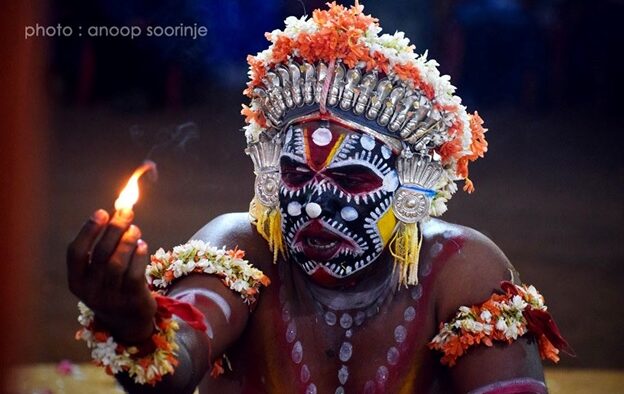 Daiva Nema
The ritual performance
A Bhoota Kola ceremony usually takes place at a Daivasthana (spirit shrine), a family shrine, a sacred grove or a village worship site, with preparations beginning long before the performance itself. As the ritual progresses, the performer dons elaborate ornaments, sacred attire, facial decorations and ceremonial headgear, while traditional drums and wind instruments build an intense atmosphere that rises gradually toward the ritual's climax. The core elements include:
- Ritual purification of the performer and the site
- Offerings made to the Daiva
- Chanting of the traditional narratives
- Musical accompaniment on drums and wind instruments
- Sacred costumes and ornaments
- Community participation throughout the night
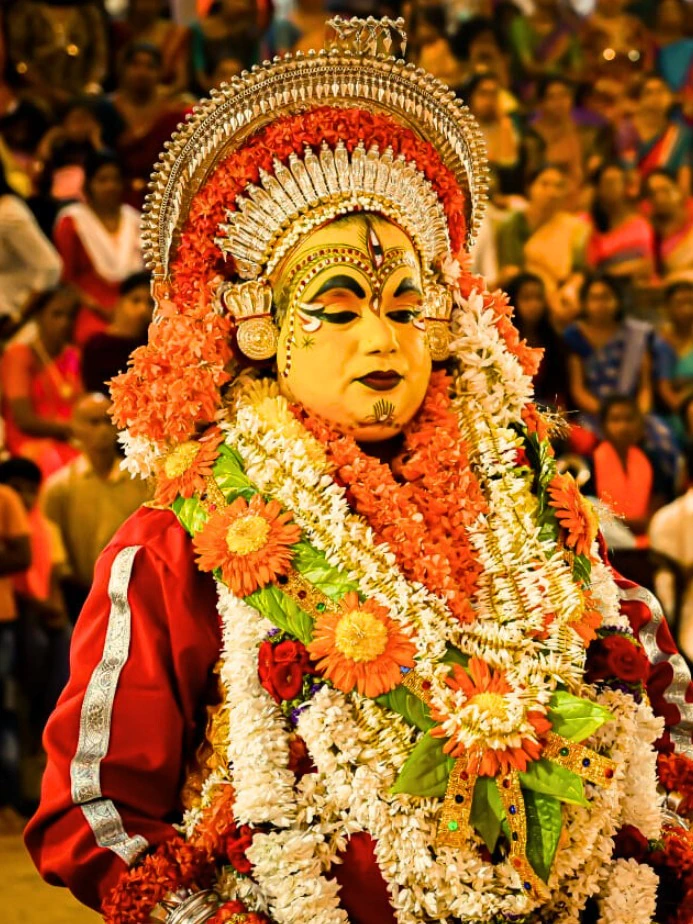
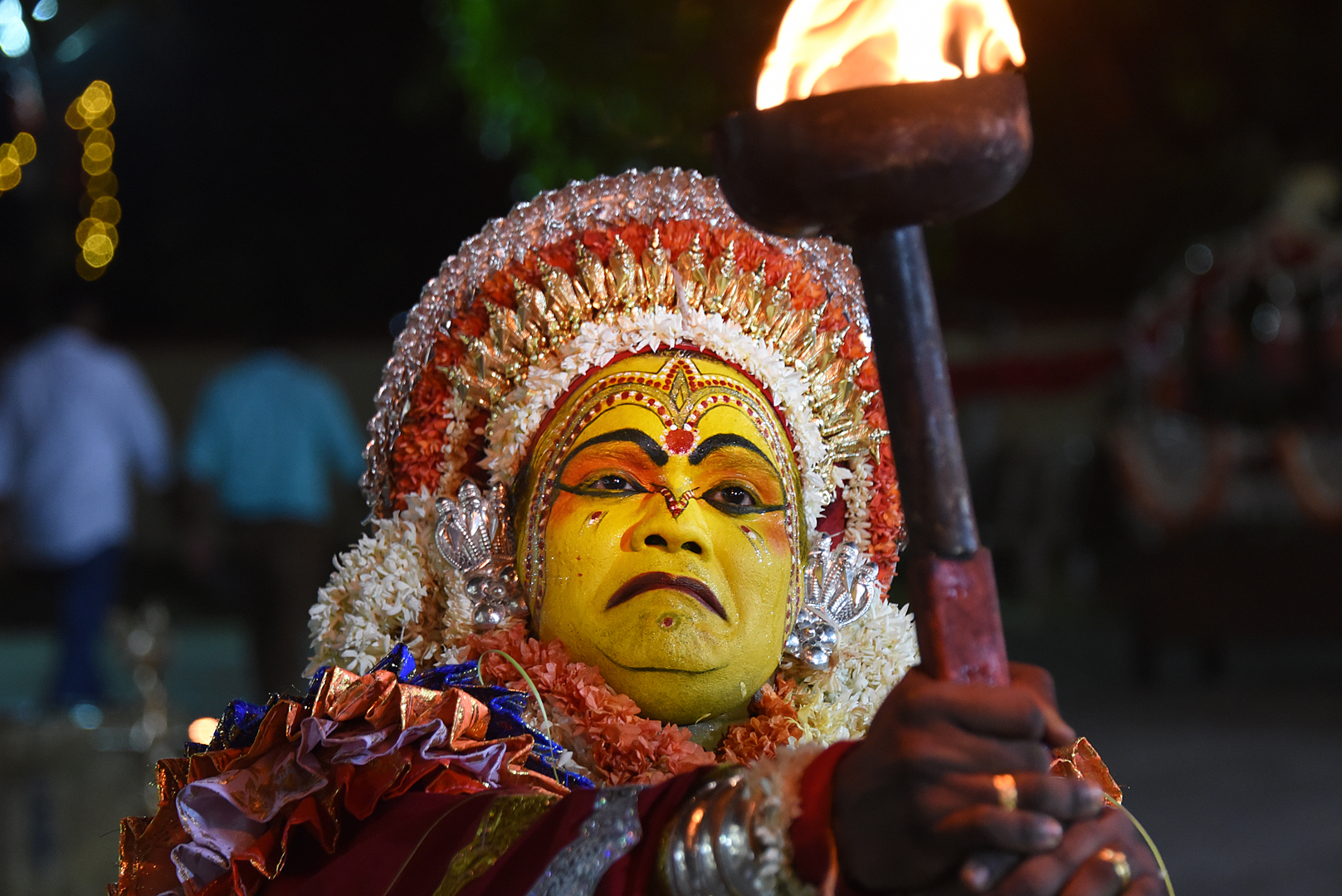
Paddana: the oral heritage
An essential component of every major Bhoota Kola is the recitation of Paddana, ancient oral narratives that preserve the history, legends and origins of the Daivas. Sung through the ritual, these recitations carry stories that may be centuries old from one generation to the next, serving as a living oral archive of coastal Karnataka's cultural heritage. A Paddana typically contains:
| The Paddana preserves | Through |
|---|---|
| Origin stories of the Daivas | How a spirit came to be worshipped |
| Heroic deeds | The acts that earned the Daiva its divine status |
| Moral lessons | The values the community holds sacred |
| Historical memories | Events and figures of the region's past |
| Community traditions | Customs and obligations handed down the generations |
Divine possession and community faith
The most significant moment of the ceremony comes when devotees believe the Daiva enters the performer. At this stage the performer is no longer regarded merely as an individual but as the living manifestation of the spirit being invoked. The Daiva blesses devotees, hears grievances, resolves disputes, offers guidance and delivers judgments on community matters. For many villagers these pronouncements are respected as divine guidance, a role that has historically made Bhoota Kola an important institution for maintaining social harmony and community justice.
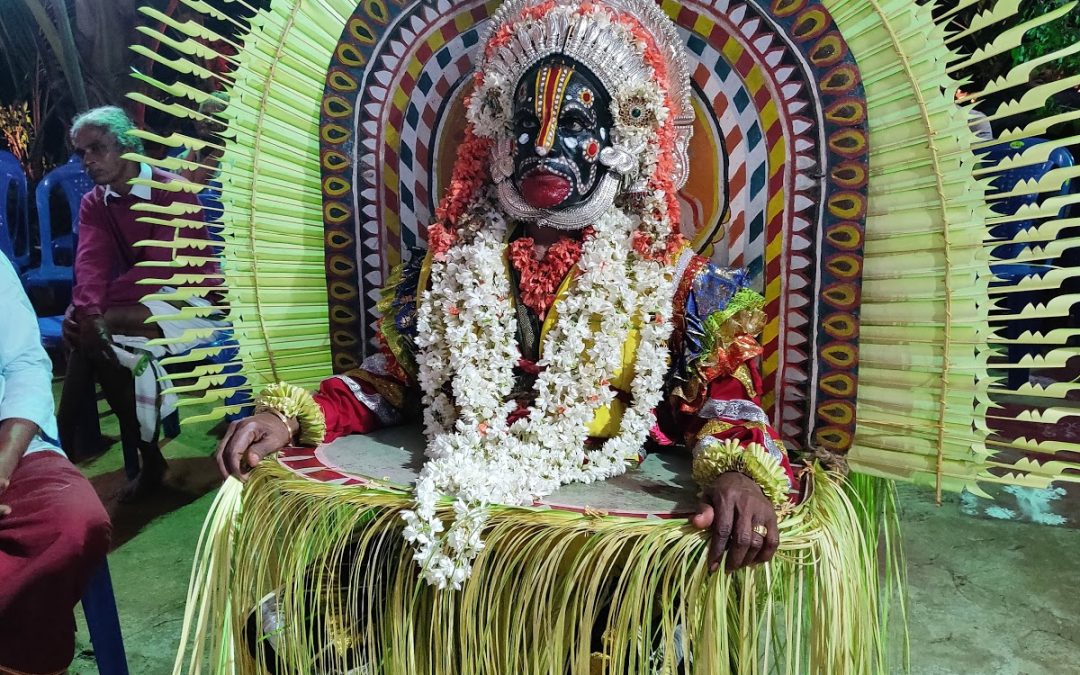 The Daiva enthroned
Bhoota Kola and Kundapura society
Bhoota Kola is deeply embedded in the cultural structure of Kundapura, drawing together people of different families, occupations and communities. The annual performance often becomes one of the most important events in a village's calendar, and the ceremony serves several interlocking functions at once.
| Function | Role in the community |
|---|---|
| Preservation of tradition | Keeps centuries-old ritual knowledge alive and practised. |
| Community unity | Brings families and groups together around a shared devotion. |
| Conflict resolution | The Daiva hears disputes and delivers respected judgments. |
| Cultural education | Transmits values, history and identity to the young. |
| Spiritual guidance | Offers blessing, counsel and reassurance to devotees. |
| Ancestral remembrance | Honours the heroes and ancestors elevated as Daivas. |
Costume and sacred artistry
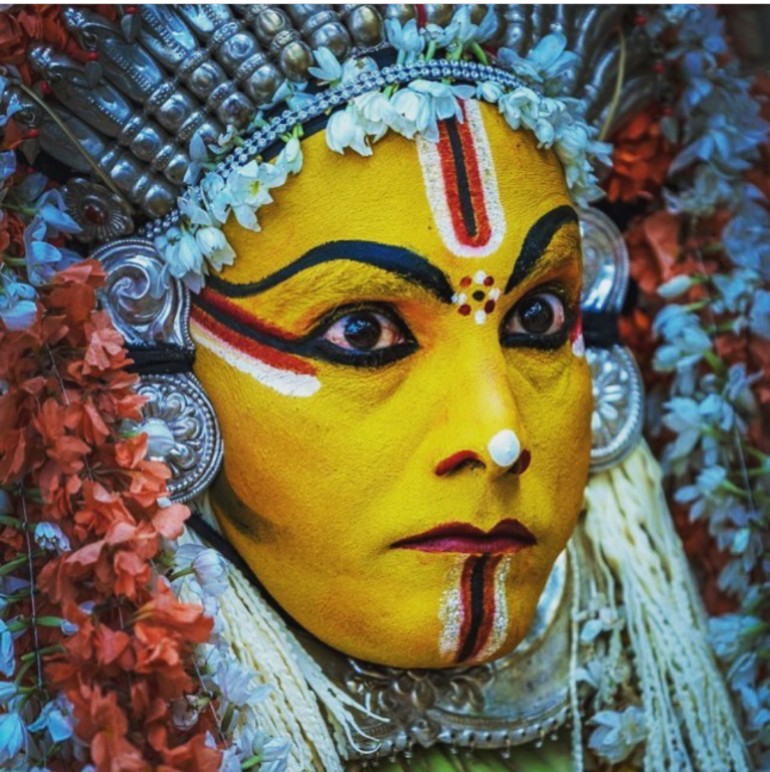
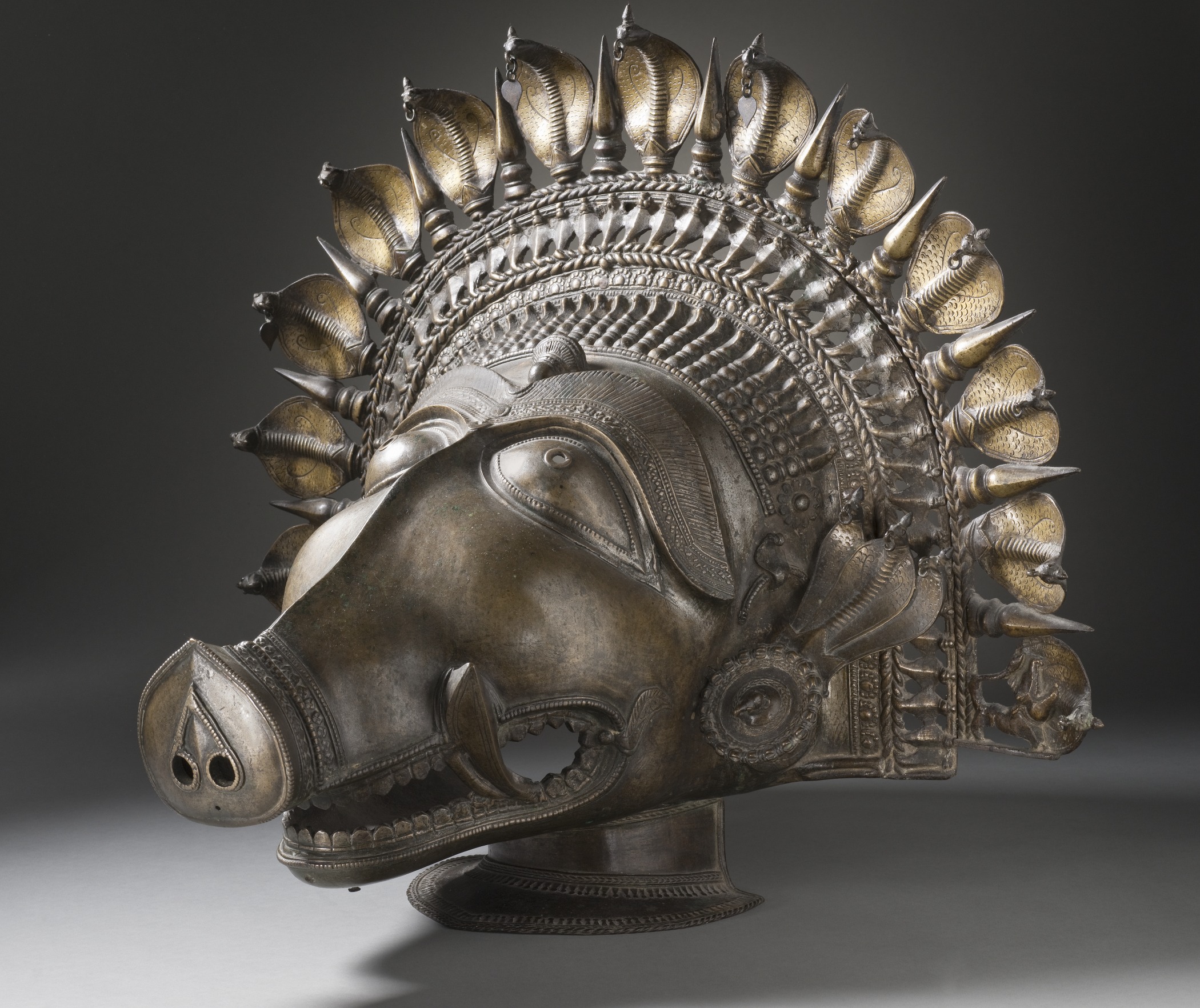
One of the most visually striking aspects of Bhoota Kola is the extraordinary craftsmanship that goes into preparing the performer. Every element carries symbolic meaning and contributes to the transformation of the dancer into the living representative of the Daiva, and the preparation itself is regarded as sacred, demanding knowledge passed down through generations. Traditional regalia may include ornamental headgear, coconut-leaf decorations, sacred jewelry, painted facial designs, ritual weapons, and bells and anklets.
Bhoota Kola and nature
The Daivas worshipped in Bhoota Kola are often closely connected to the natural world, associated with forests, wildlife, agricultural lands, rivers, sacred groves and village boundaries. Spirits such as the boar-faced Panjurli and the tiger-spirit embody this bond directly. This relationship reflects the traditional worldview of coastal Karnataka, in which human life is understood as interconnected with the natural environment, so that the ritual itself promotes respect for nature and reinforces ecological values within local communities.
A living heritage
Despite modernization and changing lifestyles, Bhoota Kola continues to thrive in Kundapura and across coastal Karnataka, because it fulfils so many roles at once, religious practice, community institution, cultural performance, historical preservation, social governance and identity formation. For many residents it represents a living connection to their ancestors and cultural roots: more than a ritual, it is a living expression of the region's identity, a sacred institution binding spirituality, history, folklore, art, music and community into one.
See also
References & notes
- Compiled report: "Bhoota Kola, the Living Spirit Tradition of Kundapura."
- Folklore archives and Paddana studies of Tulu Nadu.
- Panjurli headpiece: Los Angeles County Museum of Art (LACMA) collection.
Photographs were contributed by residents and visitors documenting the tradition (one image courtesy Anoop Soorinje), and are used for educational and cultural reference, not for commercial purposes.